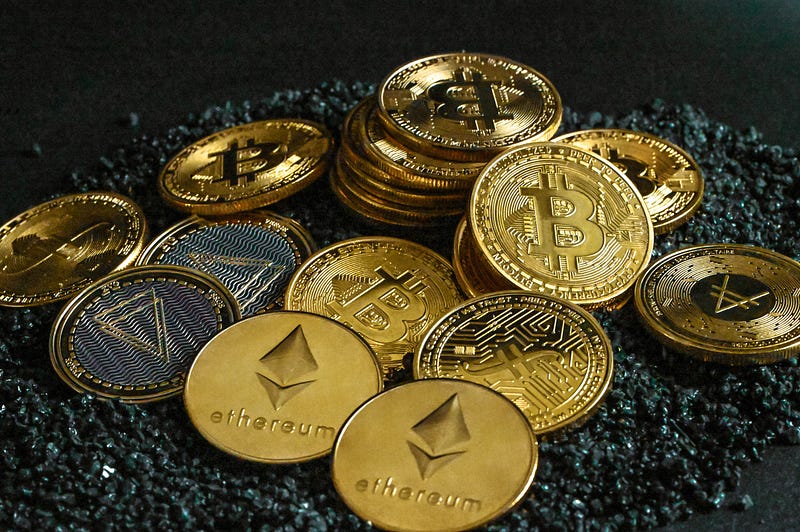
Photo by Traxer on Unsplash
So, for this article, I thought I’d go to the basics (as nothing much is happening in the market, duh!) and explain to a beginner what this buzzword — Cryptocurrency — actually is.
Is it just new internet money? Is it just a new fad? Is it going to replace fiat currency?
Let's try to understand this the easy way.
For a long time, I also lumped cryptocurrency into the same mental bucket as buzzwords and hype — Magic internet money.
Something only tech bros, gamblers, or criminals cared about.
And honestly, I don’t blame anyone who still feels that way.
Crypto doesn’t exactly do itself any favors with wild price swings, confusing jargon, scams, and influencers promising Lambos by next Tuesday.
But once I stopped looking at crypto purely as a price chart and started asking a more basic question — what problem is this actually trying to solve? — I genuinely had to tryna understand the basics.
Now, granted, this was many years ago for me. But maybe, currently, you’re in the same place I was and want to understand how this all works and fits in the modern financial system. If yes, then you’ve come to the right place!
Because mind you — dismissing crypto entirely is probably as naive as believing it will replace everything tomorrow.
So this is me thinking out loud.
What money actually is.
Why crypto exists. How it works. Why people care.
And whether it deserves a place in your mental (or financial) toolkit at all.
What Is Money, Really?
Let’s start from the basics — what is money really?
Most of us grow up thinking money is just… money. Cash in your wallet. Numbers in a bank app.
But if you zoom out, traditional money is really just a system of trust.
Governments issue it. Banks store it. Payment processors move it.
And we trust that all of these middlemen will:
Keep accurate records
Follow rules
Stay Solvent
Let us access our own money when we want
That trust usually works.
Until it doesn’t.

International transfers take days. Fees stack up quickly. Banks close on weekends. Accounts can be frozen. Entire systems can fail, as we saw very clearly in 2008.
The biggest limitation of traditional money isn’t that it’s “old.” It’s that it relies completely on centralized intermediaries.

Enter Cryptocurrency: Money Without Permission
Cryptocurrency flips that model on its head.
At its core, crypto is digital money that doesn’t need banks or governments to function. No central authority. No office hours. No single point of control.
Bitcoin, the first cryptocurrency, launched in 2009. Right after the global financial crisis. Right after, banks proved they could socialize losses and privatize gains.
That timing isn’t a coincidence.
Bitcoin was created by someone (or some group) using the name Satoshi Nakamoto. To this day, no one knows who that is.
Bitcoin’s core idea was radical but simple — What if money could move directly between people, globally, without needing to trust a middleman?
Since then, thousands of other cryptocurrencies — called altcoins — have emerged.
Ethereum.
Solana.
Dogecoin.
Different goals. Different designs. Same foundational idea: decentralized systems powered by blockchain technology.
How Crypto Actually Works (without the Buzzwords)
The magic underneath crypto is something called a blockchain.
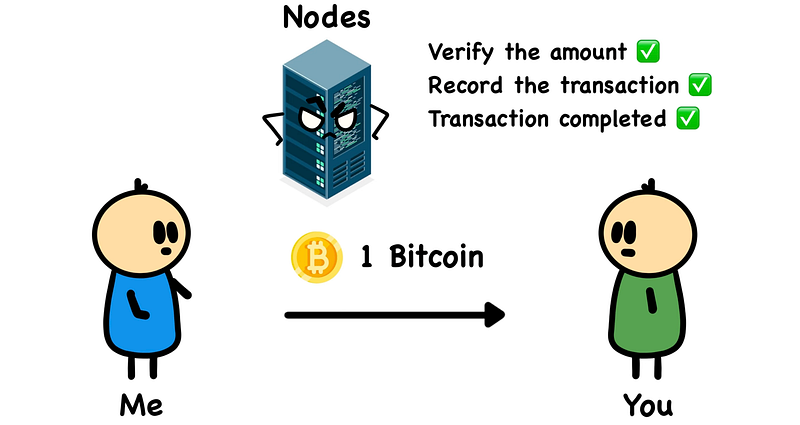
The easiest way to think about it is as a public spreadsheet. One that records every transaction. And is copied across thousands of computers around the world.
These computers are called nodes. They all hold the same ledger. They all verify transactions together.
No single node is in charge. No central server can rewrite history.
When a transaction happens, the network agrees it’s valid and adds it to the ledger. Once added, it’s extremely hard to change.
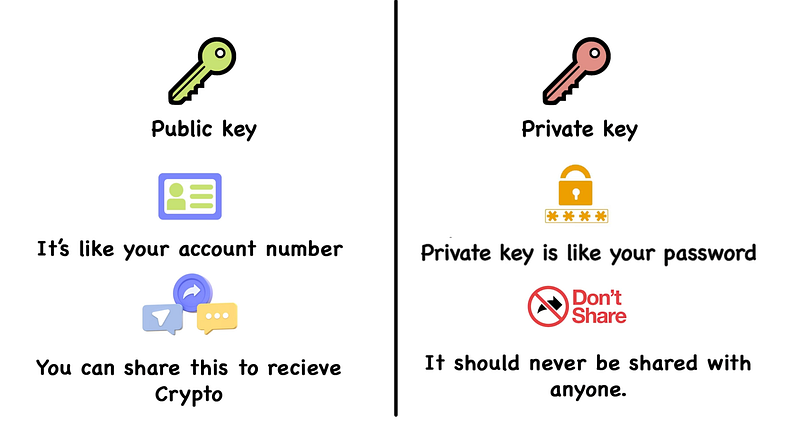
Ownership is handled through digital wallets.
Each wallet has:
a public key (like an account number)
a private key (like a password)
The public key is what you share to receive funds. The private key is what proves ownership.
Lose the private key, and the funds are gone. No customer support. No reset button.
That level of responsibility is both empowering and terrifying.
Why People Use Crypto At All?
If crypto is so complex and volatile, why does anyone bother?
Because it does some things very well.
Crypto allows:
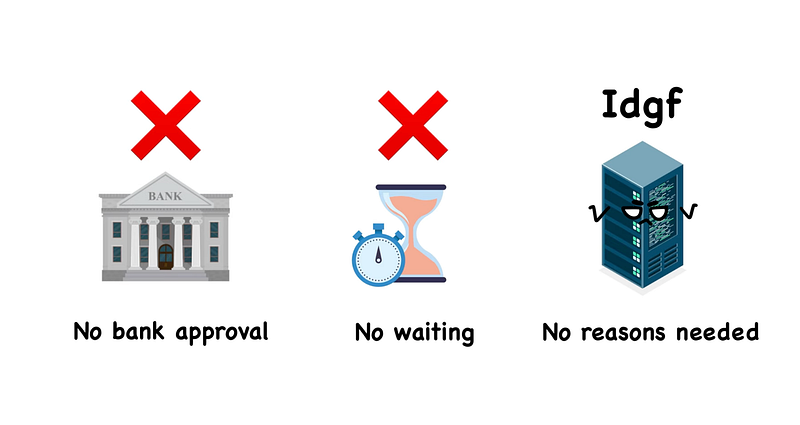
Borderless transactions
fast international transfers
relatively low fees
24/7 operation
full self-custody of funds
No bank can freeze your wallet. No payment processor can block a transfer.
But the tradeoffs are real.
Crypto is volatile. It’s not widely accepted yet. It has a steep learning curve. And yes, it has a reputation problem thanks to scams and bad actors.
Using crypto means taking responsibility that banks usually handle for you.
How People Actually Get Crypto?
Most people don’t mine crypto anymore. That ship has sailed.
Mining Bitcoin today requires specialized hardware and massive amounts of electricity. It’s not a hobby. It’s an industry.
Instead, most people:
Buy crypto on exchanges like Coinbase or Binance
receive it as payment or rewards
earn it through apps or platforms
You don’t need to buy a whole Bitcoin.
You can buy fractions.
That low barrier to entry is part of the appeal.

Why People Invest in Crypto? (And Why That’s Complicated)
Some people invest because they believe in the technology. Some because they want diversification. Some because they’ve seen the price history.
Bitcoin going from near zero to over $69,000 is hard to ignore.
But let’s be honest —
FOMO plays a massive role.
People don’t want to miss the next big thing. And crypto markets amplify emotion like nothing else.
The upside can be enormous. The downside can be brutal. That combination attracts both visionaries and gamblers.

Should You Invest in Crypto?
This is where I slow down and get careful.
Crypto is revolutionary. And speculative.
Both things can be true at once.
If someone asks me whether they should invest, my answer is never a yes or no. It’s a set of guardrails.
Only invest what you can afford to lose. Actually, research what you’re buying. Assume volatility will test your emotions. Think in years, not weeks.
Diversify.
The crypto space is full of projects that sound impressive and do nothing. It’s also full of scams designed to exploit ignorance and greed.
But the underlying technology — blockchain — is already reshaping industries far beyond finance.
Supply chains.
Healthcare.
Identity.
Data verification.
Understanding crypto isn’t just about making money. It’s about understanding a shift in how trust and value can be organized digitally.
Traditional Money vs Crypto, in Plain Terms
Traditional money is controlled by institutions. Crypto is controlled by code and consensus.
Banks offer convenience and protection. Crypto offers sovereignty and speed.
Traditional systems are stable but slow. Crypto systems are fast but volatile.
Neither is perfect.
Both have roles.

Photo by Jp Valery on Unsplash
Learning Crypto Matters, Even If You Never Buy It
Cryptocurrency is a bold experiment.
Not a guaranteed future.
Not a guaranteed failure either.
It challenges how we think about money, ownership, and trust. It forces us to ask uncomfortable questions about systems we’ve taken for granted.
You don’t need to be all-in.
You don’t need to evangelize it.
You don’t even need to own any.
But understanding crypto — really understanding it — is a knowledge advantage.
Whether this technology becomes foundational or fades into history, the ideas behind it are already influencing how the digital world evolves.
And in a world where finance, identity, and data are increasingly digital, being curious instead of dismissive might be the most valuable investment of all.
Found this article insightful?
It would mean a lot if you could give it a clap and follow for more financial alpha, which “influencers” are too lazy to study and share.🌟
Follow me on Twitter/X to stay always up to date.🎄